Introduction
The South Korean Coalition for Anti-Discrimination Legislation, which is conducting this research, is a coalition of civil society organizations in South Korea. Since 2011, the Coalition has planned and carried out a wide range of activities aimed at advancing the enactment of comprehensive anti-discrimination legislation, including advocacy with the government and the National Assembly, public discourse and agenda-building, research on anti-discrimination and anti-discrimination legislation, and public awareness campaigns.
The Coalition currently comprises 174 human rights and civil society organizations across South Korea. Its co-representatives are drawn from the Korean Women’s Associations United, Women with Disabilities Empathy, Korean Confederation of Trade Unions, Lawyers for a Democratic Society (MINBYUN), Chingusai – Korean Gay Men’s Human Rights Group, and Women Migrants Human Rights Center.
Activities of the South Korean Coalition for Anti-Discrimination Legislation (Since 2017)
2017 |
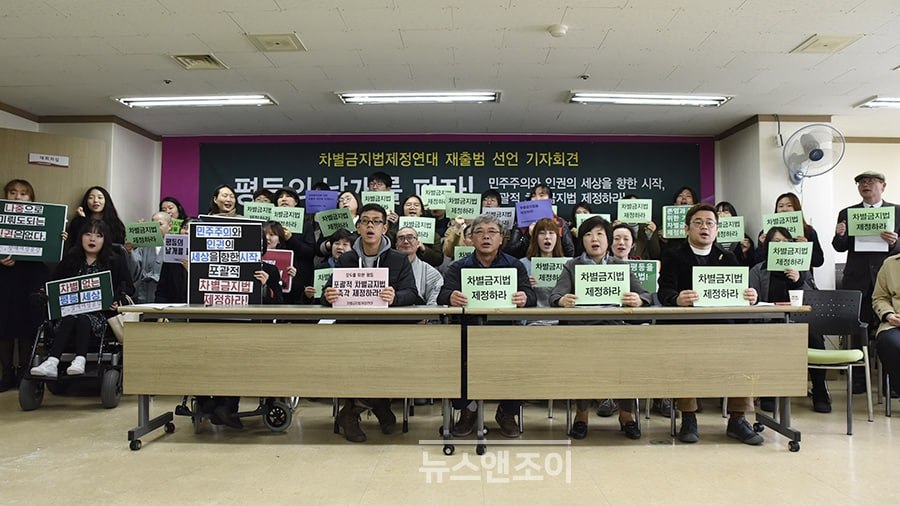
Press conference announcing the relaunch of the Coalition with more than 100 organizations; signature campaign for comprehensive anti-discrimination legislation
(Photo:NewsnJoy)
2018 |
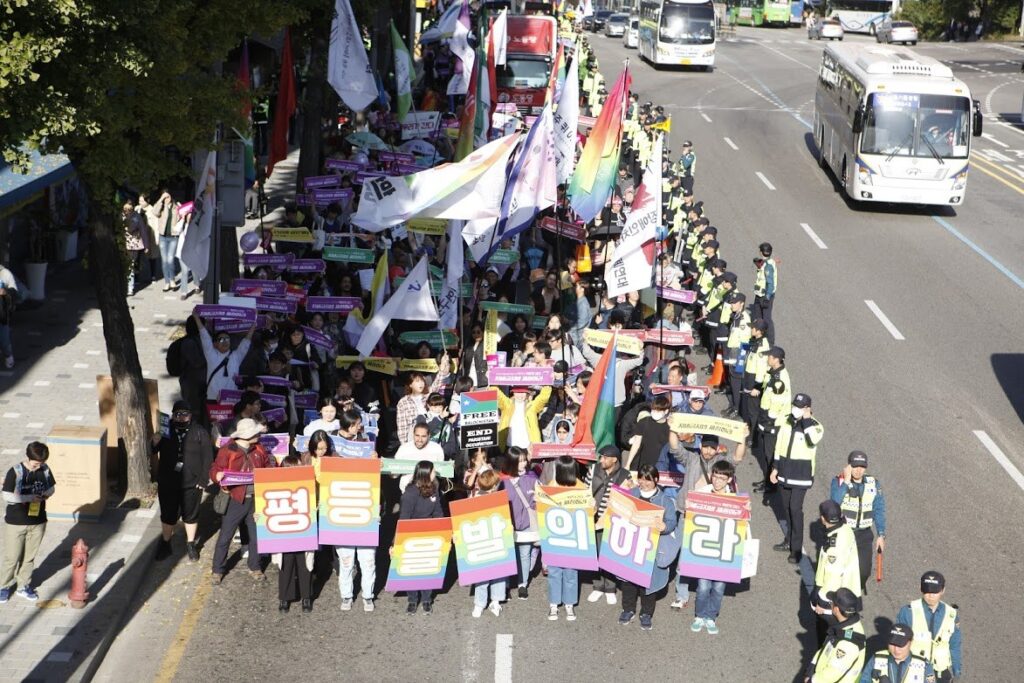
Hate Response Network during the local elections; “Equality March” calling for the enactment of a comprehensive anti-discrimination law
2019 |
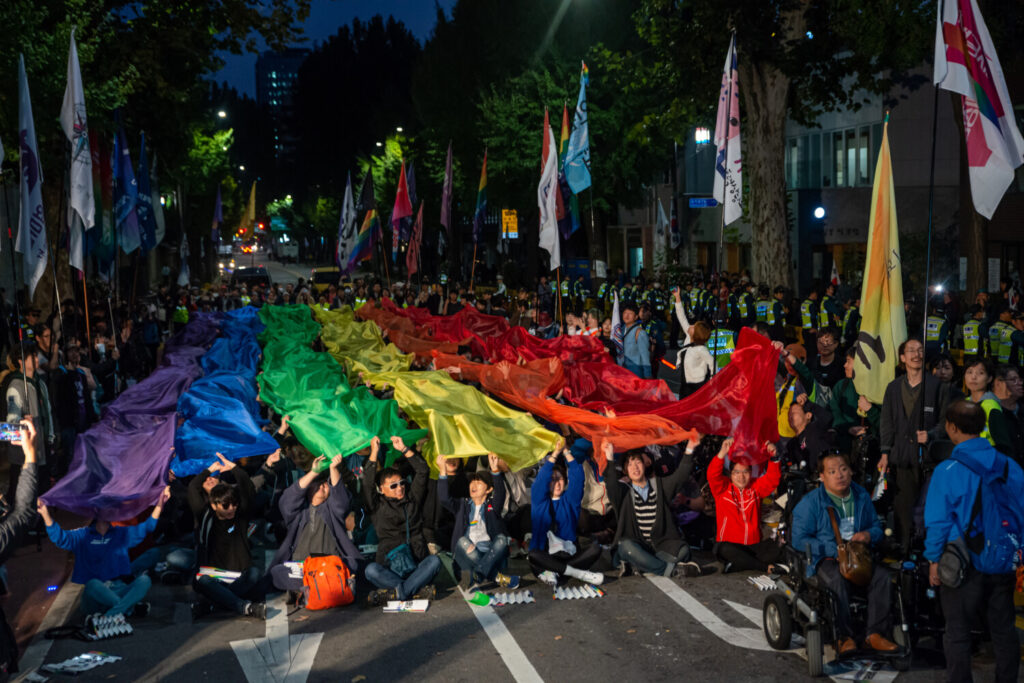
Publication of equality policy reports on the family system and employment; launch and implementation of workshops for sharing experiences of discrimination
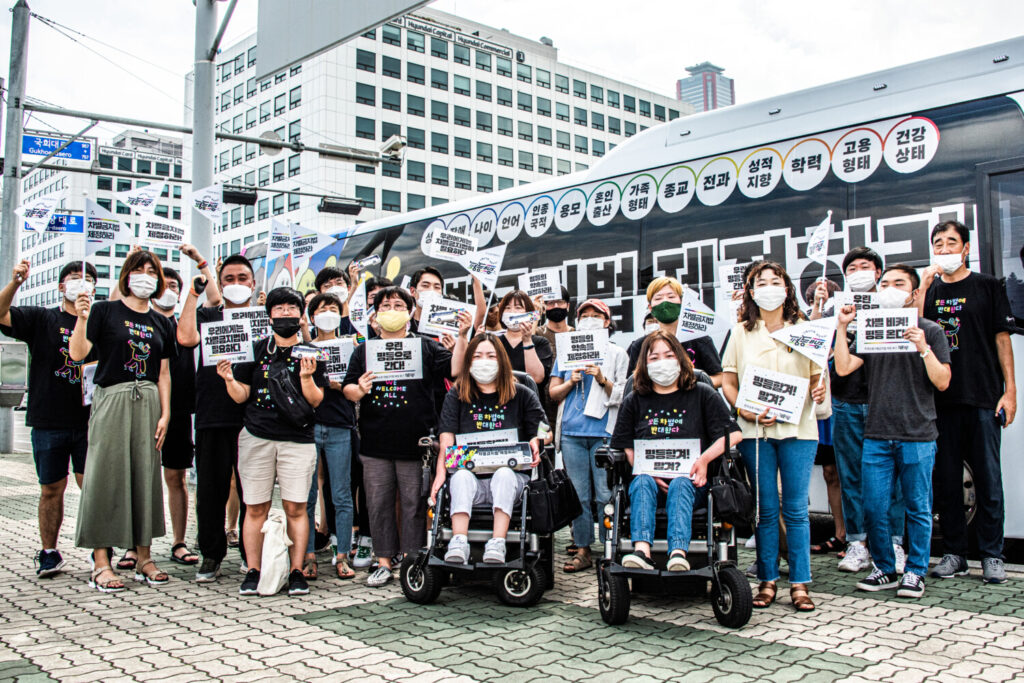
2020 |
Special lecture series on comprehensive anti-discrimination law and feminism; nationwide “Equality Bus” tour
(Photo:@ONEUL )
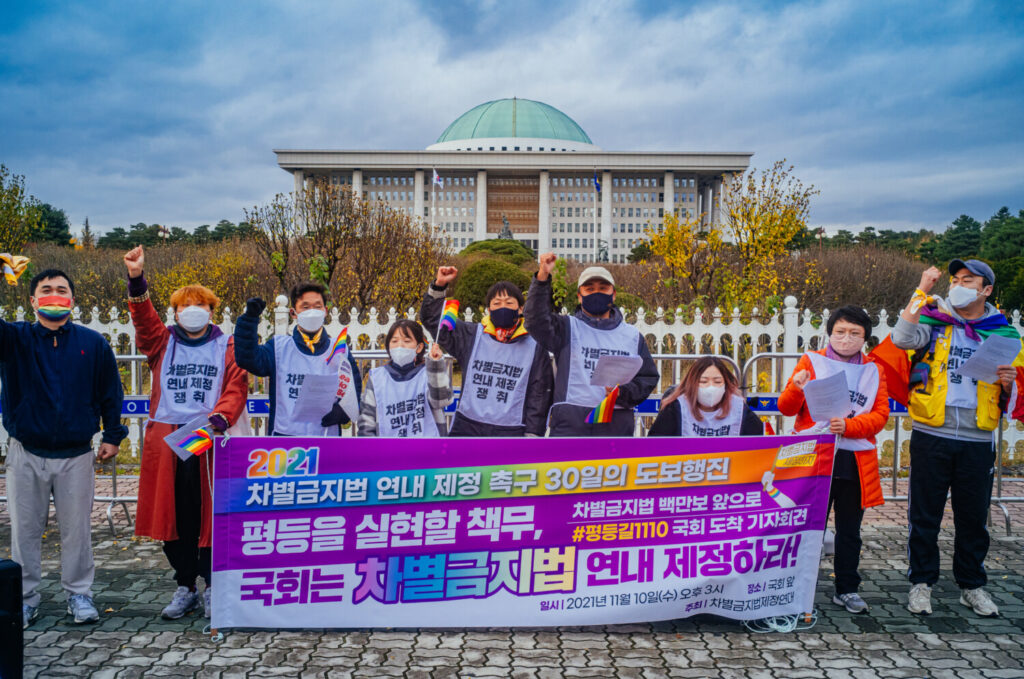
2021 |
Public forums on key issues concerning comprehensive anti-discrimination legislation; National Assembly petition supported by 100,000 people; 300-kilometre nationwide march calling for enactment; protest encampment outside the National Assembly
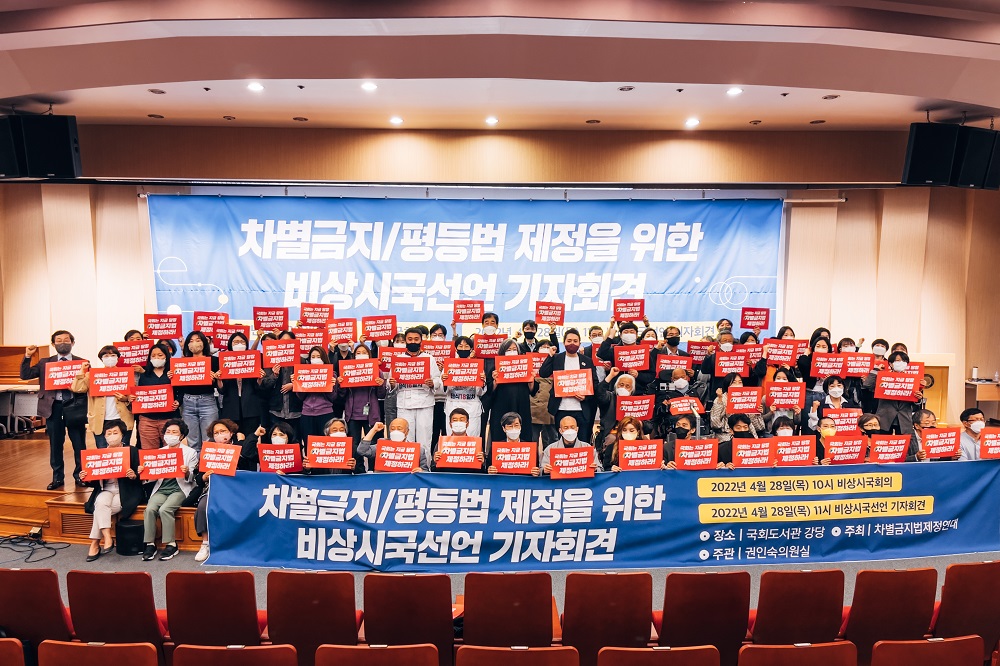
2022 |
Roundtable for Christians supporting comprehensive anti-discrimination legislation; election campaign team advocating for enactment during the presidential election; 46-day hunger-strike protest calling for enactment
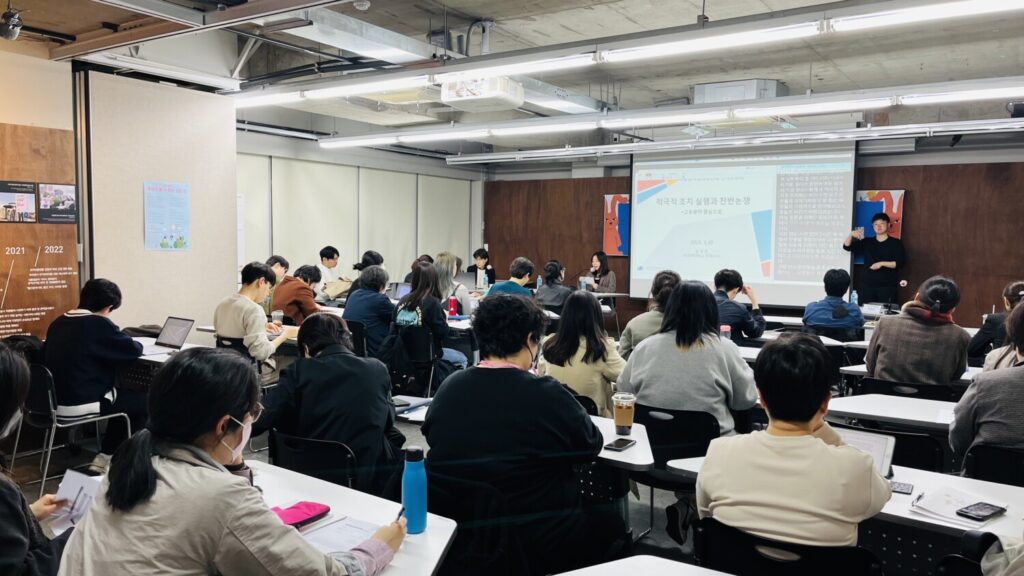
2023 |
Legislative forum series on comprehensive anti-discrimination law; response to the removal of books on gender equality from public libraries
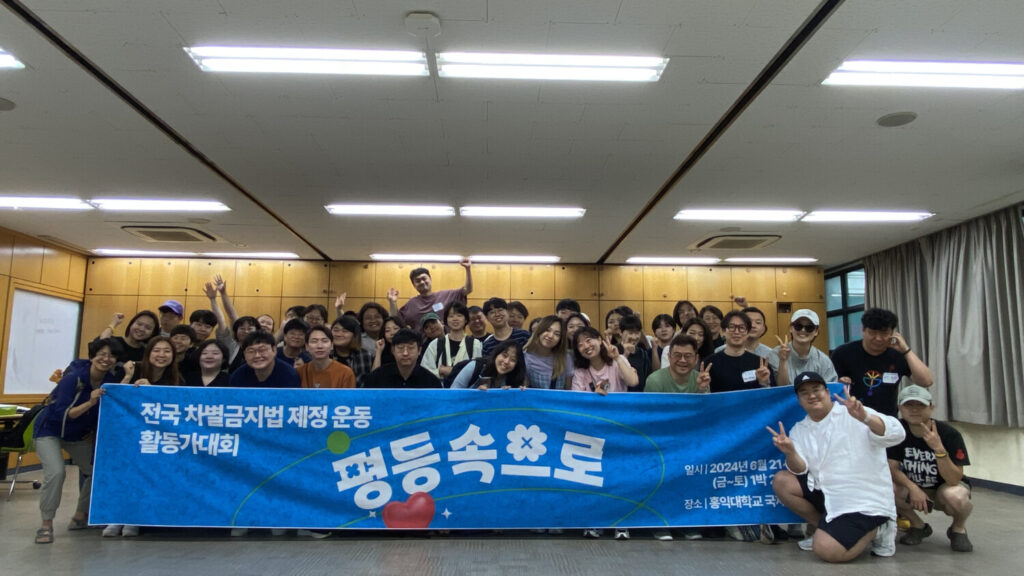
2024 |
Campaign against the censorship of books on gender equality; response to the President’s declaration of martial law
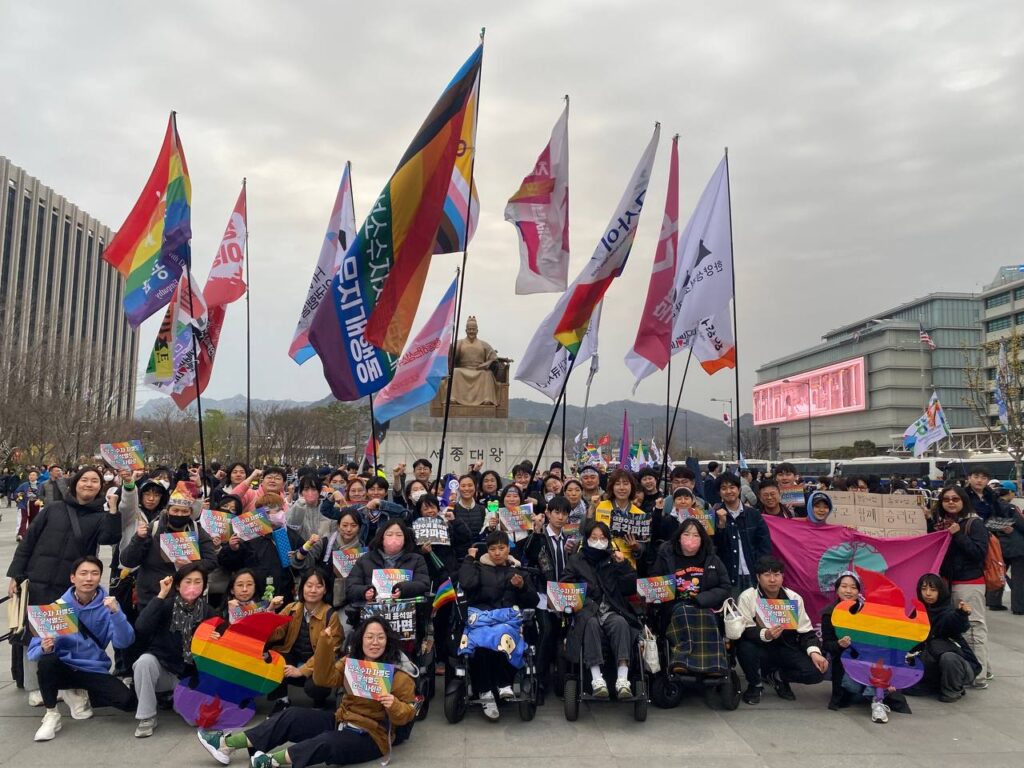
2025 |
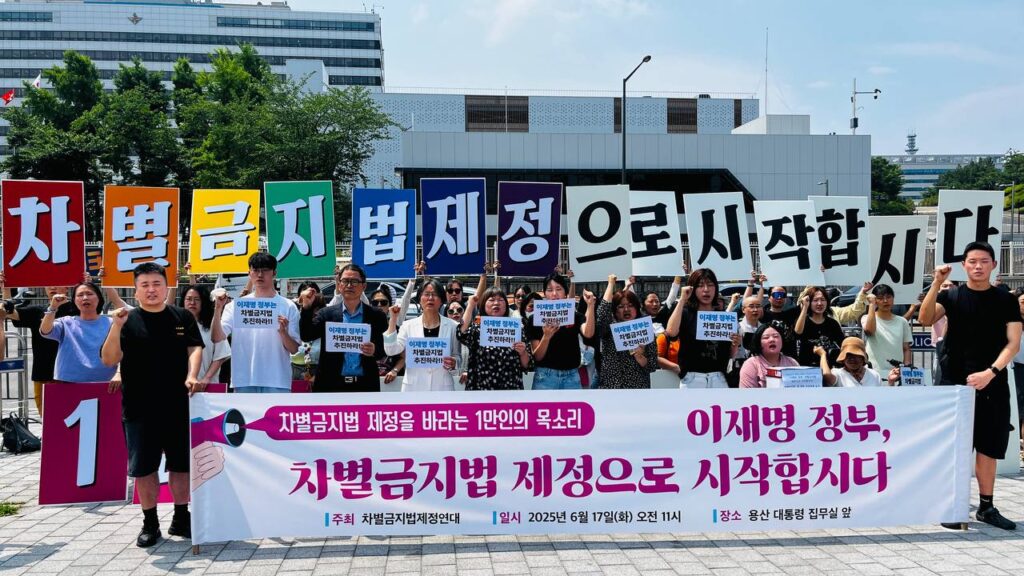
Movement calling for the President’s removal from office; publication of “A Christian Guide to Comprehensive Anti-Discrimination Law”; campaign collecting 10,000 signatures urging the new government to enact comprehensive anti-discrimination legislation
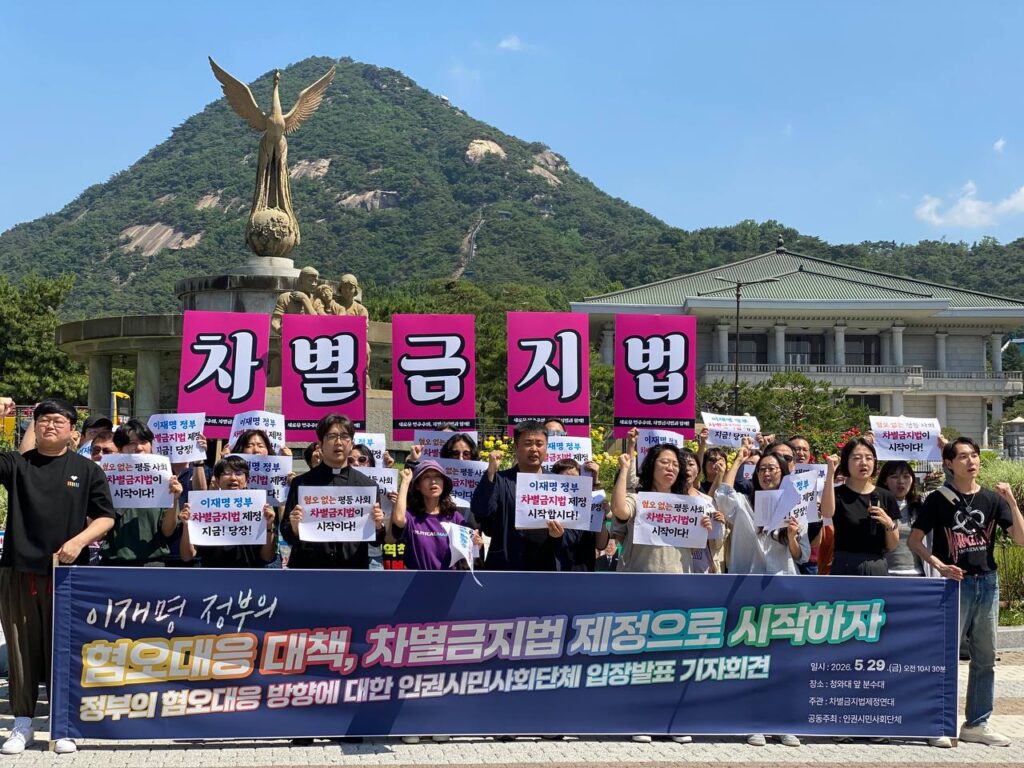
2026 |
Academic conference marking the twentieth anniversary of the National Human Rights Commission’s recommendation for comprehensive anti-discrimination legislation; inaugural cohort of the Citizens’ Campaign for Comprehensive Anti-Discrimination Legislation
Challenges Facing the Movement for Comprehensive Anti-Discrimination Legislation in South Korea
Following the National Human Rights Commission of Korea’s 2006 recommendation that a comprehensive anti-discrimination law be enacted, business leaders were the first group to issue a statement opposing the legislation. They argued that it could constrain economic activity. This was followed by strong opposition from conservative Christian groups, particularly to the inclusion of sexual orientation as a protected ground. Ultimately, the anti-discrimination bill introduced by the government in 2007 excluded sexual orientation, educational background, employment status, and several other grounds most in need of protection.
Over the ensuing two decades, the conservative Christian movement opposing anti-discrimination legislation has expanded in both scale and influence. Conservative Christian groups claim that enacting such a law would dismantle traditional conceptions of the family and that the existence of sexual minorities is incompatible with the Bible. In South Korea, they are not merely one religious group among many. They constitute the country’s largest religious population, and their votes often influence whether candidates win or lose elections. Politicians therefore pay close attention to their demands.
At the same time, there are also Christians working for the enactment of a comprehensive anti-discrimination law. Together with the South Korean Coalition for Anti-Discrimination Legislation, they explain why such a law is necessary for all citizens and why Christianity should welcome LGBTQ+ people. Through these efforts, they seek to amplify the voices of Christians committed to equality.
Meanwhile, throughout the past decade, public opinion surveys on comprehensive anti-discrimination legislation have consistently shown majority support. Although the political barrier remains high, with politicians continuing to invoke conservative Christian opposition as an excuse for inaction, South Korea’s movement for the enactment of a comprehensive anti-discrimination law has never ceased.
Comprehensive Anti-Discrimination Legislation in South Korea: Movement and Current Legislative Developments
[Legislative History]
17th National Assembly (2004-2008)
- > 24 July 2006 — The National Human Rights Commission of Korea recommended a draft Anti-Discrimination Act to the Prime Minister.
- > 2 October 2007 — The Ministry of Justice announced a draft Anti-Discrimination Act for public consultation.
- > 12 December 2007 — The Ministry of Justice introduced an Anti-Discrimination Bill after removing seven protected grounds, including sexual orientation.
- > December 2007 — Civil society and human rights organisations criticised the government bill as effectively a “law promoting discrimination” and formed the Joint Action for the Proper Enactment of an Anti-Discrimination Law.
- > 28 January 2008 — Lawmaker Roh Hoe-chan and other members of the National Assembly introduced an Anti-Discrimination Bill.
18th National Assembly (2008-2012)
- > January 2012 — At the initiative of the Joint Action against Discrimination, civil society and human rights organisations established the South Korean Coalition for Anti-Discrimination Legislation.
- > Two Anti-Discrimination Bills were introduced but lapsed at the end of the parliamentary term.
19th National Assembly (2012-2016)
- > Three Anti-Discrimination Bills were introduced.
- > In 2013, two of the bills were withdrawn following opposition led primarily by some conservative Protestant groups.
20th National Assembly (2016-2020)
- > 23 March 2017 — The South Korean Coalition for Anti-Discrimination Legislation was relaunched.
- > For the first time since the 17th National Assembly, the parliamentary term ended without the introduction of any Anti-Discrimination Bill.
21st National Assembly (2020-2024)
- > Four Anti-Discrimination Bills were introduced but lapsed at the end of the parliamentary term.
- > A public petition calling for the enactment of a comprehensive anti-discrimination law secured the required 100,000 signatures.
- > The First Subcommittee of the Legislation and Judiciary Committee held a public hearing on the legislation.
22nd National Assembly (2024-2028)
- > June 2024 — The term of the 22nd National Assembly began.
- > Two Anti-Discrimination Bills have currently been introduced and are awaiting legislative deliberation.
[Recommendations by UN Human Rights Treaty Bodies]
Since 2007, United Nations human rights treaty bodies have repeatedly recommended that the Republic of Korea enact comprehensive anti-discrimination legislation.
- 2007 UN Committee on the Elimination of Racial Discrimination (CERD), Concluding Observations
- 2009 UN Committee on Economic, Social and Cultural Rights (CESCR), Concluding Observations
- 2011UN Committee on the Elimination of Discrimination against Women (CEDAW), Concluding Observations
- 2011 UN Committee on the Rights of the Child (CRC), Concluding Observations
- 2012 UN Committee on the Elimination of Racial Discrimination (CERD), Concluding Observations
- 2015 UN Human Rights Committee (CCPR), Concluding Observations
- 2017 UN Committee on Economic, Social and Cultural Rights (CESCR), Concluding Observations
- 2018 UN Committee on the Elimination of Discrimination against Women (CEDAW), *Concluding Observations
- 2018 UN Committee on the Elimination of Racial Discrimination (CERD), Concluding Observations
- 2019 UN Committee on the Rights of the Child (CRC), Concluding Observations
- 2022 UN Committee on the Rights of Persons with Disabilities (CRPD), Concluding Observations
- 2023 UN Human Rights Committee (CCPR), Concluding Observations
- 2024 UN Committee on the Elimination of Discrimination against Women (CEDAW), Concluding Observations
- 2025 UN Committee on the Elimination of Racial Discrimination (CERD), Concluding Observations